
Commercial Roof Leak Detection Methods for Large Buildings
5 Min Read
POSTED 10.03.2026
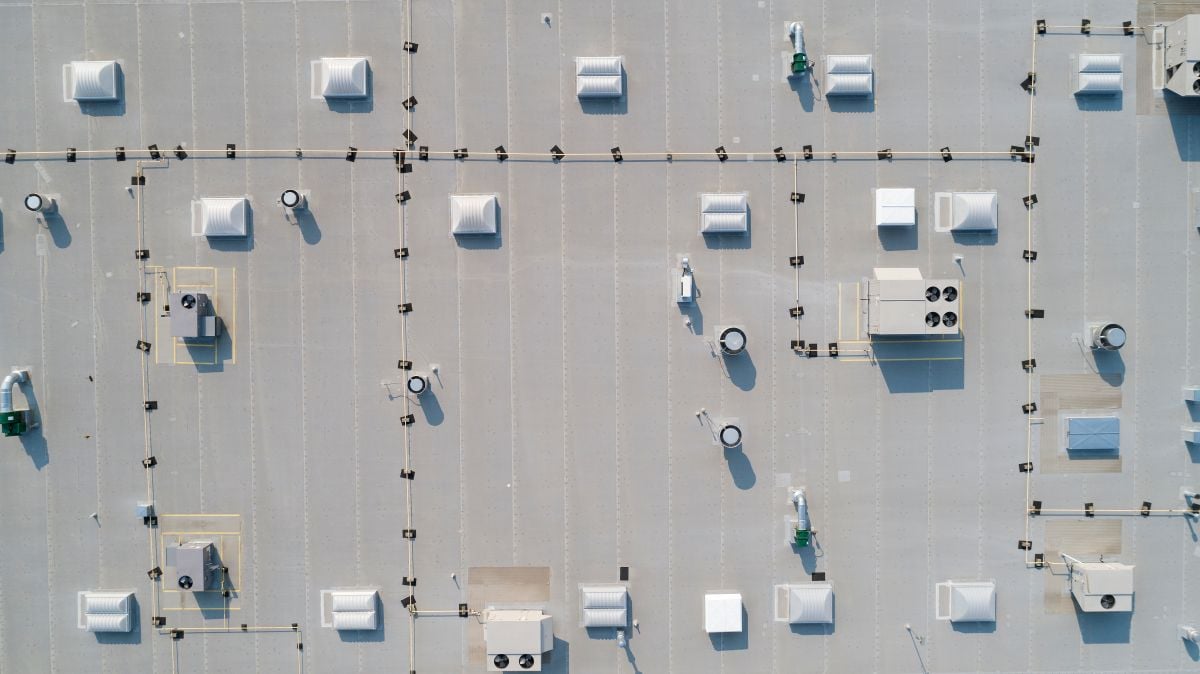
Identifying issues early with commercial roof leak detection is critical for protecting large buildings from costly structural damage and business disruption. In Madison, WI, commercial properties face heavy rain, snow accumulation, and temperature swings that can stress roofing materials over time. Because commercial roofs often cover expansive square footage, small leaks can spread unnoticed across wide areas before visible interior damage appears.
Before moisture impacts operations, property managers should keep these priorities in mind:
- Early detection reduces downtime: Faster response limits business interruptions.
- Large surface areas hide damage: Leaks may travel far from their entry point.
- Specialized testing improves accuracy: Advanced tools pinpoint issues without unnecessary tear offs.
We’re proud to serve commercial property owners in Madison, WI and surrounding communities with professional roof inspections, moisture diagnostics, and long term roofing solutions.
Why Leak Detection Is More Complex on Commercial Roofs
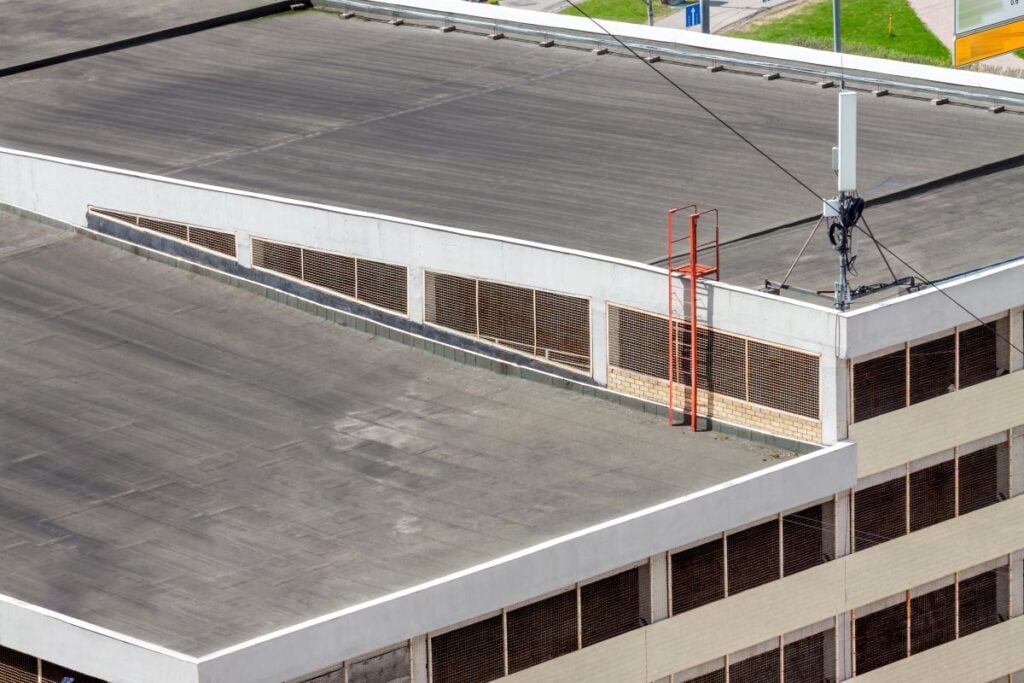
Commercial roofing systems differ significantly from residential roofs. Many large buildings use flat or low slope designs with membrane systems that allow water to move slowly toward drains. Because of this design, leaks often migrate beneath the membrane surface before appearing inside.
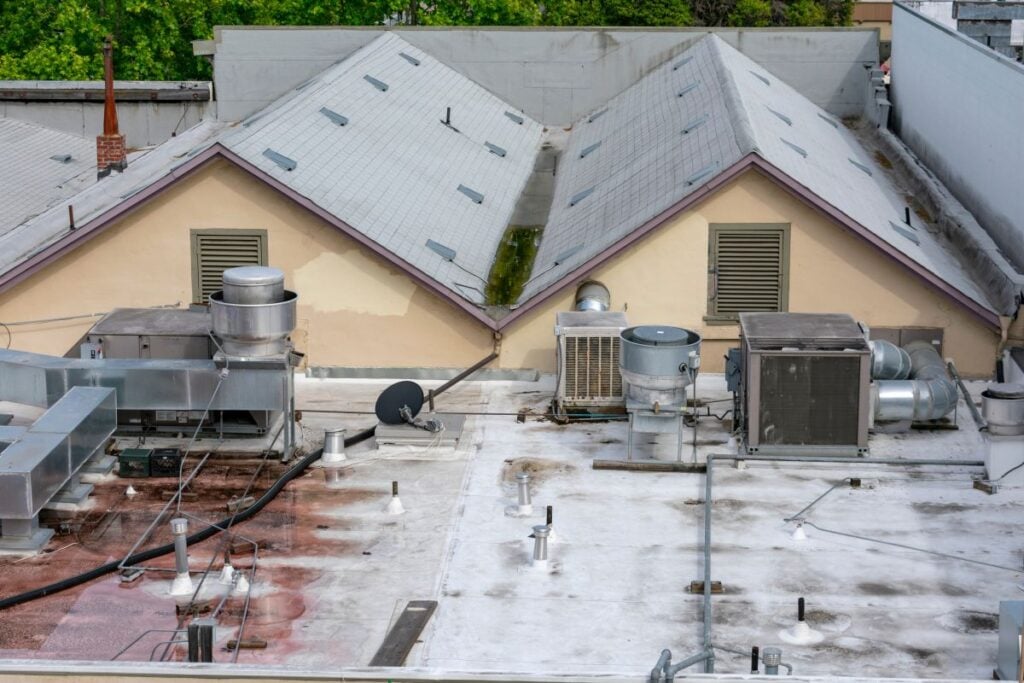
Additionally, rooftop equipment such as HVAC units, skylights, and vent penetrations create multiple vulnerable points. The size and complexity of commercial roofing systems require specialized detection techniques that go beyond visual inspection. Professional commercial roof leak detection ensures the exact location of intrusion is identified before repair begins.
4 Commercial Roof Leak Detection Methods
Large buildings require precise testing to avoid unnecessary disruption. The following four methods are commonly used to identify hidden moisture in commercial roofing systems.
1. Electronic Leak Detection
Electronic leak detection is highly effective for membrane roofing systems. This method uses low voltage electrical currents to identify breaches in the waterproof surface.
- Pinpoint accuracy: Identifies the exact location of membrane punctures.
- Non destructive testing: Minimizes removal of roofing materials.
- Ideal for flat roofs: Works well on large, continuous surfaces.
This method is particularly useful for buildings with single ply membranes where small punctures can allow water intrusion.
2. Thermal Imaging Inspections
Flat roofs thermal imaging uses infrared cameras to detect temperature differences caused by trapped moisture. Wet insulation retains heat differently than dry materials, making hidden leaks visible through scanning.
- Moisture mapping: Identifies saturated areas beneath the surface.
- Large area coverage: Efficient for expansive commercial roofs.
- Reduced guesswork: Focuses repair efforts only where needed.
Thermal imaging is often performed in the evening when temperature contrast is greatest, improving detection accuracy.
3. Core Sampling and Moisture Probing
In some cases, technicians perform controlled core cuts to examine insulation and decking beneath the membrane surface. Moisture probes can also measure water content within roofing materials.
- Direct material inspection: Confirms internal saturation levels.
- Structural evaluation: Assesses roof integrity beneath visible layers.
- Targeted repair planning: Determines scope of replacement versus repair.
While slightly more invasive than electronic testing, core sampling provides definitive confirmation of moisture conditions.
4. Flood Testing
Flood testing involves temporarily containing water on specific roof sections to observe potential entry points. This method is carefully controlled to avoid overloading the structure.
- Controlled testing process: Simulates heavy rainfall conditions.
- Effective for drainage issues: Identifies improper slope or blocked drains.
- Verification tool: Confirms suspected leak areas.
Flood testing is often used in combination with other commercial roof leak detection methods to confirm findings.
Common Leak Sources on Large Commercial Buildings
Commercial roofs experience unique stressors that increase leak risk. Identifying common failure points helps property managers prioritize inspections.
- Seam separation: Aging membrane seams may lift over time.
- Flashing deterioration: Metal edging around parapet walls can loosen.
- Roof penetrations: HVAC curbs and vent pipes create vulnerable transitions.
- Drain clogs: Blocked drains cause standing water that stresses materials.
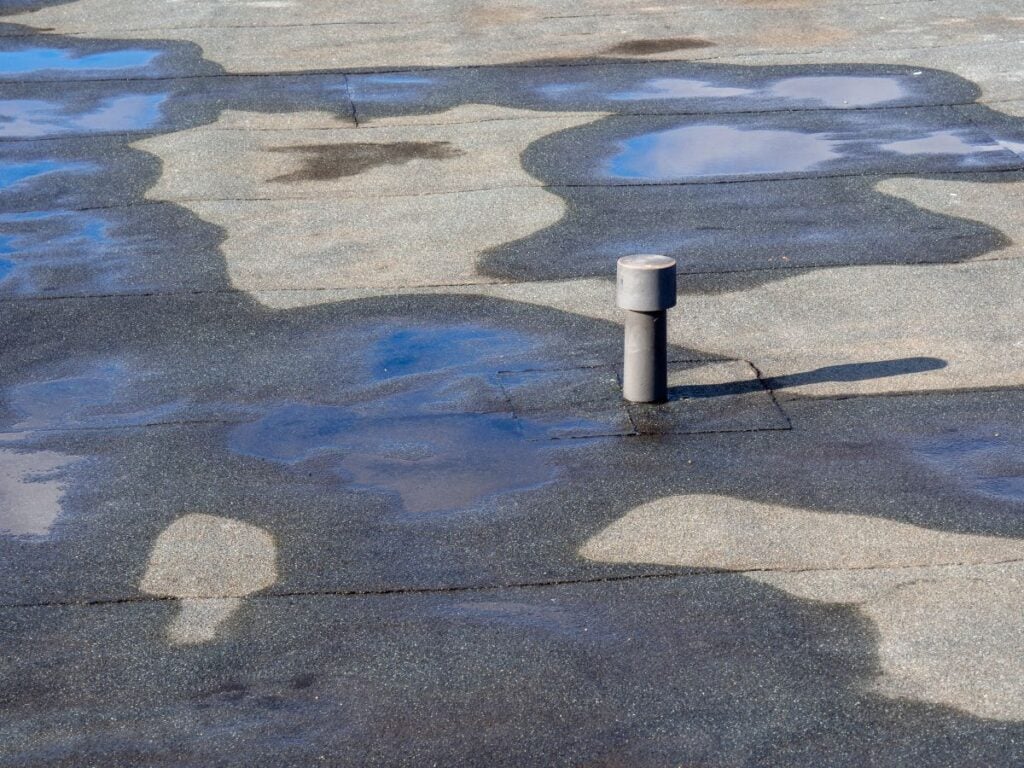
- Ponding water: Persistent pooling accelerates membrane wear.
In Madison, WI, snow accumulation followed by thaw cycles can worsen seam separation and flashing fatigue, especially on older systems.
Benefits of Professional Commercial Leak Detection
Advanced detection methods provide measurable advantages for property owners and facility managers. Instead of relying solely on visible interior damage, professional testing identifies issues before widespread deterioration occurs.
- Cost control: Early detection prevents large scale structural replacement.
- Operational protection: Reduces disruption to tenants and employees.
- Extended roof lifespan: Targeted repair supports long term durability.
- Improved budgeting: Accurate diagnostics help forecast maintenance needs.
Because commercial roofs represent a significant capital investment, routine inspections and testing protect both the structure and business continuity.
When to Schedule a Commercial Roof Inspection
Property managers should schedule inspections at least twice per year, typically in spring and fall. Additional inspections are recommended after severe weather events such as hailstorms or heavy snowfall.
Warning signs that require immediate evaluation include water stains on ceiling tiles, unexplained moisture near walls, bubbling membrane sections, or persistent ponding water. Even minor symptoms can indicate widespread underlying issues beneath the surface. Proactive commercial roof leak detection ensures that small concerns are addressed before they impact interior finishes, electrical systems, or inventory.
Key Advantages of Proactive Leak Detection Programs
Large commercial buildings benefit from structured inspection programs rather than reactive repairs. Establishing a proactive leak detection plan helps property managers maintain roof performance year round and avoid emergency service disruptions.
- Predictable maintenance budgeting: Scheduled inspections reduce surprise expenses.
- Reduced interior damage risk: Early identification limits water intrusion into offices or warehouses.
- Extended membrane lifespan: Small repairs prevent widespread deterioration.
- Improved tenant satisfaction: Fewer disruptions support business continuity.
- Documentation for compliance: Inspection records support warranty and insurance requirements.
A consistent approach to commercial roof leak detection strengthens long term building performance and preserves capital investments.
Why Commercial Property Owners Trust Badgerland Exteriors
Badgerland Exteriors provides comprehensive commercial roofing inspections and diagnostic services tailored to large buildings. Our team evaluates membrane surfaces, flashing details, drainage systems, and structural components to identify leak sources with precision. Whether your property requires electronic testing, thermal imaging, or targeted repair planning, we focus on minimizing disruption while protecting your investment. Contact Badgerland Exteriors today to schedule your commercial roof leak detection service in Madison, WI or nearby communities.
Let’s Get Started
Fix Your Roof the Badger Way
Got a question? Want to learn more about your options when it comes to caring for your home exterior? Our team is standing by with the information you need to start you roof replacement project today!
