
Roof Replacement Financing Options: How to Pay for a New Roof Without the Stress
9 Min Read
POSTED 28.07.2026

Roof replacement financing options exist because most homeowners aren’t sitting on $12,000 to $18,000 in liquid savings when their roof gives out. A roof doesn’t fail on a convenient timeline; it fails after a hail storm, in the middle of winter, or right before a home sale. Knowing what financing paths are available, how they differ, and which one fits your situation is how you move forward without putting the project off until the damage gets worse. If you want to understand what a replacement actually costs before deciding how to pay for it, see what a full roof replacement involves for Wisconsin homeowners.
Here is what this guide covers:
- The most common ways homeowners finance a new roof
- How contractor financing compares to other options
- When insurance covers roof replacement costs
- What to watch for when evaluating financing terms
- Common questions homeowners ask about paying for a roof
Why Financing a Roof Replacement Is More Common Than You Think
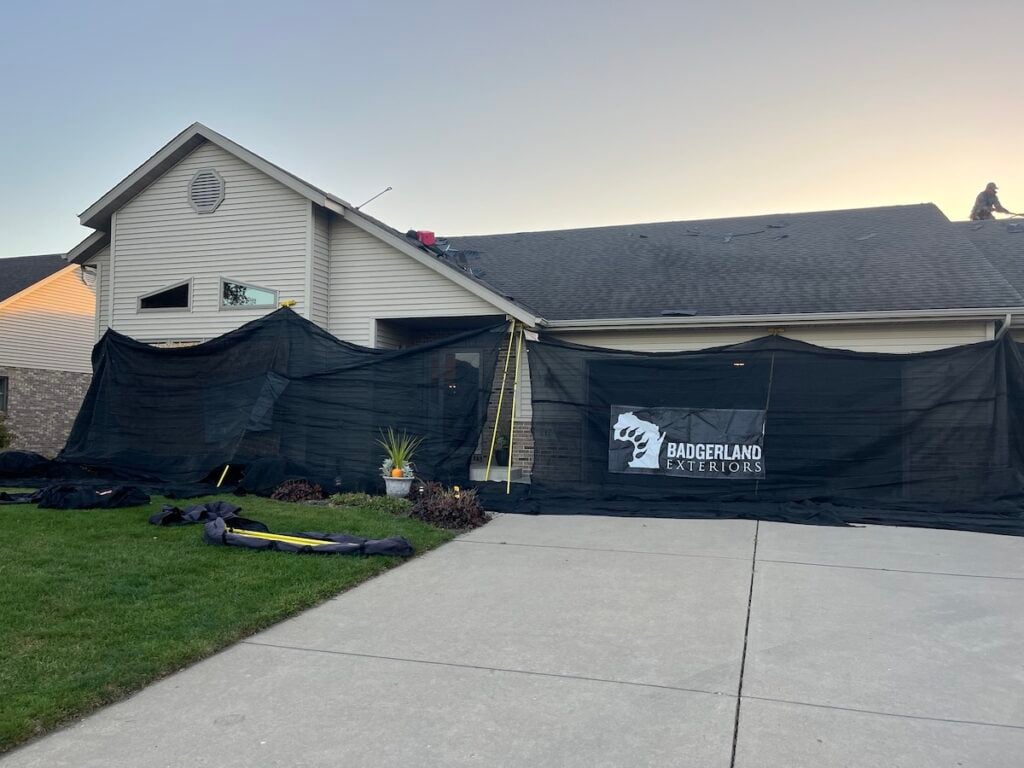
A roof replacement is one of the largest unplanned home expenses a homeowner faces. According to Fixr’s U.S. Roofing Industry Statistics, 40 percent of homeowners use a credit card to pay for roofing work, while only 9 percent use dedicated financing options such as contractor financing or a home improvement loan. That gap suggests many homeowners aren’t aware of what financing options are actually available, and end up carrying high-interest credit card balances on a project that could have been structured much more affordably.
Understanding your options before you’re in the middle of an emergency makes for a better decision. The right financing path depends on your credit, how much equity you have in your home, how quickly you need the work done, and what terms you can reasonably afford.
5 Ways to Finance a Roof Replacement
These are the most common financing options available to Wisconsin homeowners replacing a roof, with honest assessments of where each works best.
1. Contractor Financing
Many roofing contractors offer financing directly through their CRM or billing systems, allowing homeowners to apply and get approved quickly without going to a bank. Badgerland Exteriors offers financing through Acculynx for qualified homeowners.
- Fast approval: Decisions often come within minutes to a few hours, making this the most practical option when a project needs to move quickly.
- No separate bank application: Financing is arranged alongside the project estimate, keeping everything in one place.
- Fixed repayment terms: Spreads the cost over a set period rather than rolling it onto a high-interest revolving credit card.
- Best for: Homeowners who need work done soon and want to avoid the bank process with reasonable credit.
2. Home Equity Loan or HELOC
A home equity loan provides a lump sum at a fixed rate repaid over a set term. A HELOC works more like a line of credit, letting you draw as needed. Both use your home as collateral and typically carry lower rates than personal loans or credit cards.
- Lower interest rates: Generally the most cost-effective borrowing option for homeowners with substantial equity.
- Requires 15 to 20 percent home equity: And acceptable credit to qualify.
- Slower to fund: Application and approval takes longer than contractor financing, which matters when a roof issue is urgent.
- Best for: Homeowners who aren’t in a time crunch and want the lowest possible rate on a large project.
3. Personal Loan
Personal loans from banks, credit unions, or online lenders provide a fixed amount at a fixed rate without requiring home equity. They’re faster to fund than home equity products and don’t put your home at risk as collateral.
- No equity required: Accessible to homeowners who haven’t built significant equity yet.
- Rates vary by credit score: Strong credit can yield competitive rates; lower scores may result in rates that make this more expensive than contractor financing.
- Moderate speed: Faster than home equity products but slower than contractor financing in most cases.
- Best for: Homeowners who need funds quickly, don’t have sufficient equity, and have solid credit.
4. Insurance Claim
If your roof was damaged by a covered peril, hail, wind, falling trees, or ice dam damage, your homeowner’s insurance policy may cover a significant portion or all of the replacement cost, minus your deductible.
- Free storm damage inspections: Badgerland Exteriors documents damage in a way that supports a claim, including written assessments that hold up with adjusters.
- Replacement cost vs. actual cash value: Replacement cost policies pay the full cost of a new roof; actual cash value policies depreciate the payout based on the roof’s age.
- File promptly: Most policies have deadlines for storm-related claims. Waiting can affect eligibility.
- Best for: Any homeowner whose roof damage was caused by a sudden, covered weather event rather than gradual wear.
5. Government-Assisted Programs
Lower-income homeowners may qualify for federally backed programs that fund home improvements without requiring equity or strong credit.
- FHA Title 1 Property Improvement Loan: Government-insured loans for home improvements that don’t require equity in your home.
- USDA home repair loans and grants: Available in rural Wisconsin areas for qualifying homeowners at low or no cost.
- Wisconsin weatherization programs: Some counties offer assistance that may include roofing work as part of broader energy efficiency improvements.
- Best for: Homeowners who qualify based on income and may not have access to conventional financing products.
Contractor Financing vs. Other Options: A Quick Comparison
| Option | Speed | Collateral Required | Best For |
| Contractor Financing | Fast | No | Quick approval, convenience |
| Home Equity Loan | Slow | Yes (home) | Low rates, large amounts |
| HELOC | Moderate | Yes (home) | Ongoing or phased projects |
| Personal Loan | Moderate | No | No equity, good credit |
| Insurance Claim | Varies | No | Storm or covered damage |
| Government Programs | Slow | No | Lower-income homeowners |
What to Watch for in Roofing Financing Terms
Not all financing offers are equal. Before accepting any financing arrangement, understand these terms clearly.
- Interest rate vs. promotional rate: Some contractor financing offers a promotional zero-percent period that converts to a high standard rate if the balance isn’t paid off. Know what the rate becomes and when.
- Loan term: Longer terms mean lower monthly payments but more total interest paid. Run the numbers on what the project actually costs over the full term before committing.
- Prepayment penalties: Some loan products penalize early payoff. If you plan to pay the balance down quickly, confirm there are no penalties for doing so.
- Deferred interest: This is different from deferred payment. With deferred interest, if the full balance isn’t paid by the end of a promotional period, all accrued interest is added back to the principal. Read the fine print.
- Secured vs. unsecured: Secured loans use your home as collateral. Defaulting on a secured loan puts your property at risk. Unsecured loans don’t carry that risk but typically come with higher rates.
We’re proud to serve homeowners in Waunakee, WI, and nearby communities with roof replacement, storm damage inspections, and financing options through Acculynx.
When Insurance Should Be the First Call
If your roof was damaged in a storm, insurance should be your first call, not your last resort. Wisconsin homeowners deal with hail events, ice dam damage, and high-wind storms that regularly produce legitimate insurance claims for full roof replacement. Getting a professional inspection and documentation before contacting your insurer puts you in a much stronger position when the adjuster arrives.
A few things to know before filing a claim:
- File promptly: Most policies have deadlines for storm-related claims. Delaying can affect your eligibility.
- Document everything: Photos taken immediately after a storm event are valuable. A contractor’s written damage assessment is even more so.
- Understand your deductible: If the deductible is close to the full repair cost, filing may not make financial sense for minor damage. For full replacement, it almost always does.
- Know what your policy covers: Policies vary on age of roof, type of damage, and settlement method (actual cash value vs. replacement cost value). Replacement cost value policies pay out full replacement cost; actual cash value policies depreciate the payout based on the roof’s age.
Frequently Asked Questions About Roof Replacement Financing
Homeowners evaluating how to pay for a roof replacement tend to ask the same questions. Here are direct answers.
How much does a roof replacement cost in Wisconsin?
For most Wisconsin homes using architectural asphalt shingles, a full roof replacement runs between $10,000 and $18,000 depending on roof size, pitch, and whether decking repairs are needed. The only accurate number is one based on an on-site assessment. Badgerland Exteriors provides free estimates with no obligation.
Does financing a roof affect my credit score?
Applying for financing typically involves a hard credit inquiry, which can cause a small temporary dip in your credit score. The long-term impact depends on how well you manage repayment. Paying consistently on time will generally improve your score over the loan term.
Can I finance a roof replacement with bad credit?
It depends on the product and lender. Some contractor financing programs and personal loan lenders work with borrowers who have lower credit scores, though at higher interest rates. Government-assisted programs may have more flexible qualification requirements. It’s worth asking your contractor what financing options are available regardless of your credit situation.
How long does contractor financing approval take?
Contractor financing through systems like Acculynx is typically fast, often providing a decision within minutes to a few hours of application. This is one of the primary advantages over bank products, which can take days to weeks.
Is it better to pay cash or finance a roof replacement?
If you have the cash available, paying outright avoids interest entirely. If using that cash would deplete your emergency fund or create financial strain, financing at a reasonable rate may be the smarter move. The right answer depends on your full financial picture, not just the cost of the roof.
Badgerland Exteriors Makes Financing a Roof Simple

A roof replacement is a significant investment, and cost shouldn’t be the reason it gets deferred until the damage is worse. Badgerland Exteriors has been replacing roofs for Waunakee homeowners and across central Wisconsin since 2009, and we offer financing through Acculynx to make the process as straightforward as the installation itself. Free estimates, free storm damage inspections, and a 10-year workmanship warranty on full replacements come standard.
Talk to our team about financing and get your free estimate from Badgerland Exteriors today.

Let’s Get Started
Fix Your Roof the Badger Way
Got a question? Want to learn more about your options when it comes to caring for your home exterior? Our team is standing by with the information you need to start you roof replacement project today!
