Commercial Flat Roof Repair: Common Issues, Costs & When to Act Fast
11 Min Read
POSTED 01.09.2026
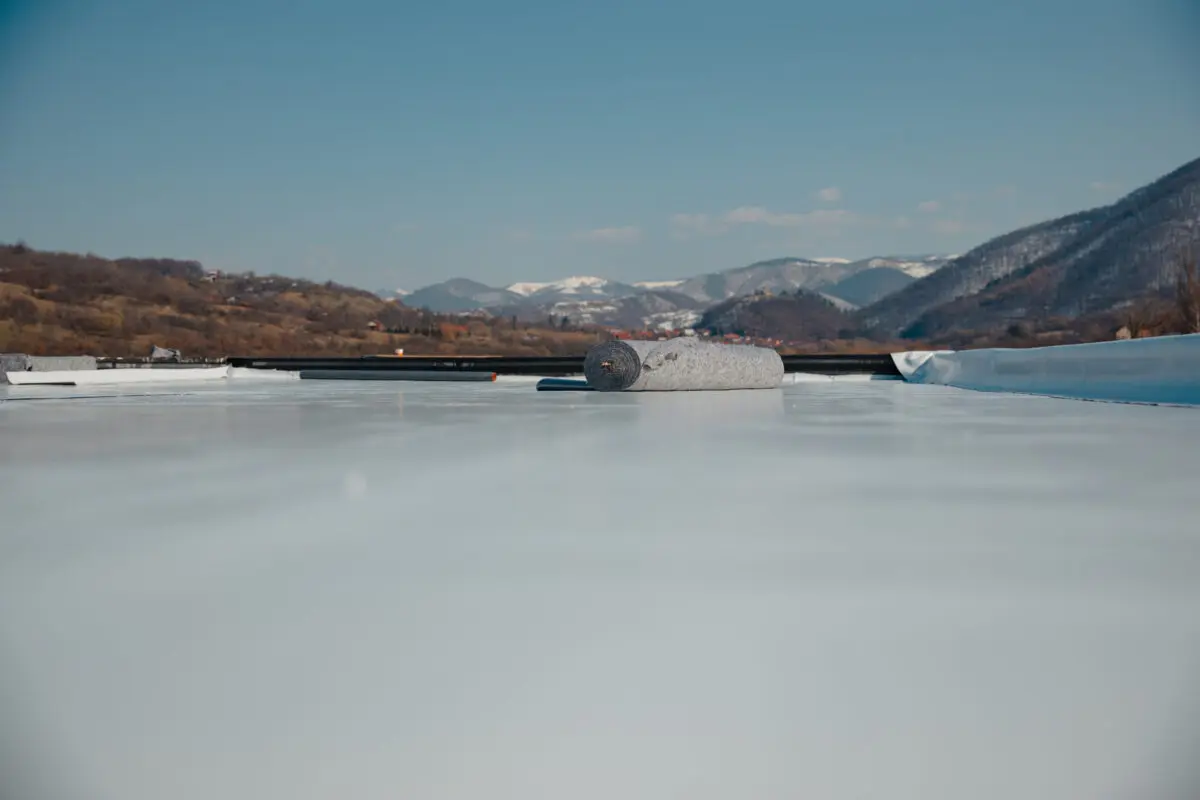
Commercial flat roof repair is one of those maintenance priorities that business owners and property managers tend to delay until it becomes urgent. A small leak, a soft spot in the membrane, or a drain that’s draining slowly all seem manageable until they’re not. On a flat or low-slope commercial roof, small problems progress faster than on a pitched residential roof because water has nowhere to go; it pools, it sits, and it works its way into every gap and seam it can find. Acting early is almost always cheaper than acting after the damage has spread. If you manage a commercial property in the area, commercial roofing in Wisconsin before a small issue becomes a large one.
Here is what this guide covers:
- The most common flat roof problems and what causes them
- Signs that repair is urgent and shouldn’t wait
- How commercial flat roof repair is priced
- When repair makes more sense than replacement
- What professional commercial roof repair involves
- Common questions property managers ask about flat roof repair
Why Flat Roofs Need Different Attention Than Pitched Roofs
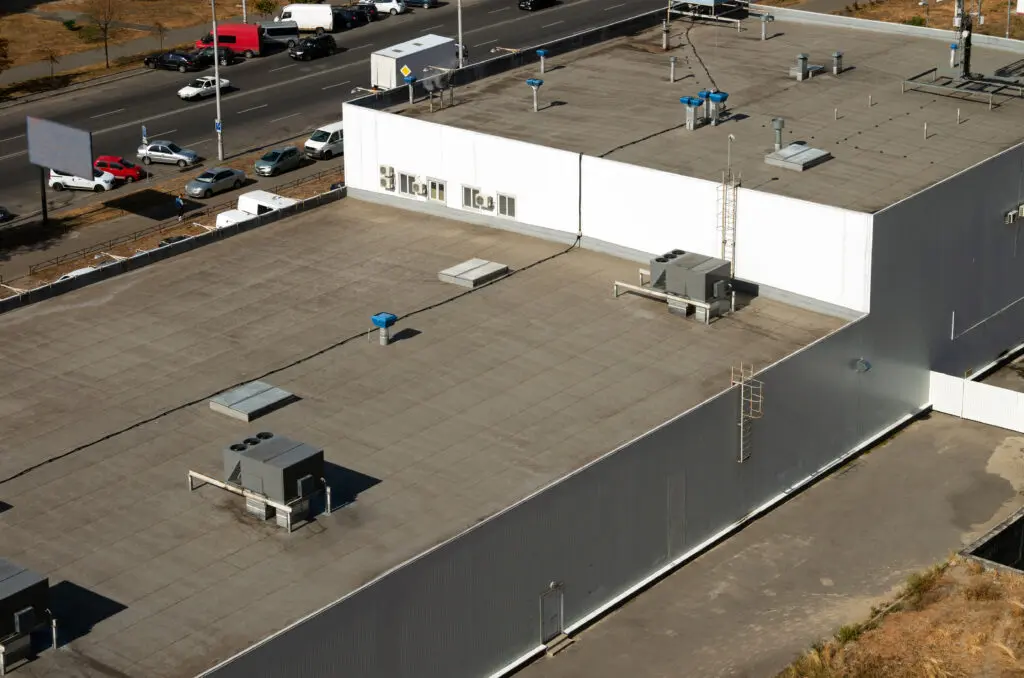
Commercial flat roofs and low-slope roofs don’t shed water the way a pitched residential roof does. Commercial roofing systems rely entirely on drains, scuppers, and slope built into the roof deck to move water off the surface. When that system is compromised by clogged drains, inadequate slope, or membrane failure at a seam, water pools. And pooling water is the primary driver of premature flat roof failure.
According to the National Roofing Contractors Association, ponding water that remains on a roof surface for more than 48 hours after rainfall is detrimental to most roofing assemblies and accelerates deterioration of the membrane and underlying components. On a commercial flat roof in Wisconsin, where spring snowmelt and heavy rain events are common, drainage performance isn’t optional; it’s the system doing its primary job.
We’re proud to serve commercial property owners in Stoughton, WI, and nearby communities with flat roof repair, commercial roof inspections, and full replacement services.
6 Most Common Commercial Flat Roof Problems
These are the issues that account for the majority of commercial flat roof repair calls across south-central Wisconsin.
1. Ponding Water and Drainage Failure
Standing water after rain or snowmelt is the most common and most damaging flat roof problem. Ponding water adds structural load, accelerates membrane breakdown, promotes algae and biological growth, and works its way into every vulnerable point in the roofing assembly. Clogged roof drains, blocked scuppers, and inadequate slope are the most common causes.
- Signs: Water sitting on the roof surface more than 48 hours after rain, visible staining or algae rings on the membrane surface, interior ceiling staining in areas directly below low points.
- Act fast when: Multiple drain areas are showing standing water or interior damage is appearing, as widespread drainage failure can compromise the deck.
2. Membrane Blistering and Bubbling
Blisters form when moisture or air becomes trapped between the membrane and the substrate beneath it. They appear as raised bubbles on the roof surface and are common on older modified bitumen and built-up roofing systems. Left unaddressed, blisters eventually rupture and become direct water entry points.
- Signs: Visible raised areas on the membrane surface, soft or spongy feel underfoot in localized areas, discoloration around blister edges.
- Act fast when: Blisters are large, numerous, or show signs of rupture, as the underlying substrate may already be compromised.
3. Seam and Flashing Failures
On single-ply systems like TPO and EPDM, seams are the most vulnerable points. Heat-welded TPO seams can separate if the original weld was incomplete; EPDM adhesive seams can lose bond through repeated freeze-thaw cycling. Flashing at penetrations, HVAC curbs, skylights, and parapet walls is similarly vulnerable and is the most common source of active leaks on otherwise sound membrane systems.
- Signs: Visible seam separation or lifting at edges, leaks that appear near mechanical equipment, vent penetrations, or parapet walls, flashing that has pulled away from the wall or curb.
- Act fast when: Active leaks are present or seams show visible daylight, as water infiltration through seams reaches the deck quickly.
4. Punctures and Impact Damage
Rooftop foot traffic, HVAC service work, fallen debris, and hail impact can puncture flat roof membranes. Even small punctures create direct water entry points that are easy to overlook on a visual scan but cause significant damage over time.
- Signs: Visible holes, cuts, or impact marks on the membrane surface, localized leaks that appear after storm events or rooftop maintenance work.
- Act fast when: Any puncture is found, as they do not self-heal and grow in consequence with each rain event.
5. Shrinkage and Membrane Cracking
EPDM membranes can shrink over time, pulling flashing away from walls and creating gaps at critical transition points. Modified bitumen and built-up systems develop a cracked, scaly pattern known as alligatoring as they age, a sign the bitumen has oxidized and lost its waterproofing properties.
- Signs: Membrane pulling away from parapet walls or edges, visible cracking across large areas of the surface, flashing separation at transition points.
- Act fast when: Alligatoring covers significant surface area or membrane is pulling from edges, as these indicate system-wide deterioration rather than isolated damage.
6. Interior Leaks With No Obvious Exterior Source
Flat roof leaks frequently appear inside the building at a location far from the actual entry point. Water travels along structural members, insulation, and vapor barriers before dripping through ceiling tiles. Tracing the source without getting on the roof and performing a methodical inspection is difficult.
- Signs: Ceiling staining, mold growth at interior walls near exterior, water stains on mechanical equipment below roof penetrations.
- Act fast when: Mold is present or water is reaching electrical systems, as both create urgent health and safety concerns.
When Commercial Flat Roof Repair Is Urgent

Not every flat roof problem requires same-day action, but some do. Here are the clear signals that repair should not wait.
- Active interior leaks: Water reaching the building interior is always urgent. Inventory, equipment, and finishes are at immediate risk, and the leak source is expanding with every rain event.
- Ponding water over structural concerns: Significant ponding adds weight. On older structures or roofs with compromised deck, this becomes a structural concern, not just a waterproofing issue.
- Exposed membrane or deck: Any area where the membrane has torn away, peeled back, or been removed by weather leaves the roof deck directly exposed to Wisconsin’s rainfall and freeze-thaw conditions.
- Failing flashing at HVAC penetrations: HVAC units on commercial roofs are high-use penetration points. Flashing failure here allows water to enter around mechanical equipment and into the building at multiple points simultaneously.
- Mold or biological growth on interior surfaces: Mold appearing on interior ceiling or wall surfaces below the roofline signals that moisture has been infiltrating long enough to create a health concern.
What Commercial Flat Roof Repair Costs
Commercial flat roof repair pricing varies significantly based on the type of membrane, the scope of damage, and what’s been affected beneath the surface. These are general ranges for the south-central Wisconsin market.
| Repair Type | Typical Cost Range |
| Drain clearing and minor ponding correction | $300–$700 |
| Small membrane patch (under 10 sq ft) | $400–$900 |
| Seam repair on TPO or EPDM | $500–$1,200 |
| Flashing repair at single penetration | $400–$800 |
| Blister repair (per blister, depending on size) | $300–$700 |
| Moderate area repair with deck assessment | $1,000–$3,500 |
| Large area repair or partial re-membrane | $3,500–$10,000+ |
These figures assume standard membrane systems and accessible rooflines. Rooftop equipment, limited staging access, multi-story buildings, and deck damage discovered during repair all affect final cost. A professional on-site assessment is the only accurate source for your specific project.
What Professional Commercial Flat Roof Repair Involves
A professional commercial roof repair is not a matter of patching what’s visible. It’s a methodical process of identifying the actual entry point, addressing the underlying cause, and restoring the system.
Inspection and Moisture Mapping
A qualified commercial roofing contractor begins with a thorough inspection that includes both the roof surface and the interior below affected areas. Moisture meters or infrared scanning may be used to identify wet insulation or decking that isn’t visible on the surface. The goal is to confirm the actual leak source, which is frequently different from where water is appearing inside.
Root Cause Identification
Once the source is located, the underlying cause is identified. A seam that has separated due to original weld failure requires a different repair than one that has failed due to substrate movement. Flashing that has pulled away due to membrane shrinkage requires a different approach than flashing that was improperly installed. Understanding the cause determines the repair method.
Membrane Preparation and Repair
The repair area is cleaned and prepared according to the membrane manufacturer’s specifications. For TPO, damaged sections are cut out and new membrane is heat-welded in place with a minimum 6-inch overlap on all sides. For EPDM, patches are applied with appropriate adhesive after thorough surface cleaning. Modified bitumen and built-up repairs involve heat application or cold-applied adhesive depending on the system.
Flashing and Penetration Restoration
All flashing and penetration seals in and around the repair area are inspected and restored. A membrane repair that doesn’t address adjacent flashing conditions is one that will return for another service call.
Drainage Assessment and Documentation
The drainage performance of the repaired area is assessed and the contractor provides written documentation of the scope of work completed, materials used, and any conditions observed that warrant monitoring. This documentation is useful for insurance purposes and for tracking the roof’s condition over time.
When Replacement Makes More Sense Than Repair
Repair is the right answer for isolated damage on a roof that still has useful life remaining. Roof replacement becomes the better investment when:
- The membrane is approaching or past its expected lifespan (typically 15 to 30 years depending on the system).
- Repairs are recurring in multiple areas, indicating systemic failure rather than isolated incidents.
- Moisture has infiltrated the insulation layer extensively, requiring removal and replacement of the full assembly.
- The total cost of repairs over a 2 to 3 year period approaches or exceeds the cost of a full replacement.
Badgerland Exteriors provides honest, line-item assessments that distinguish between what can be repaired effectively and what warrants a replacement conversation.
Frequently Asked Questions About Commercial Flat Roof Repair
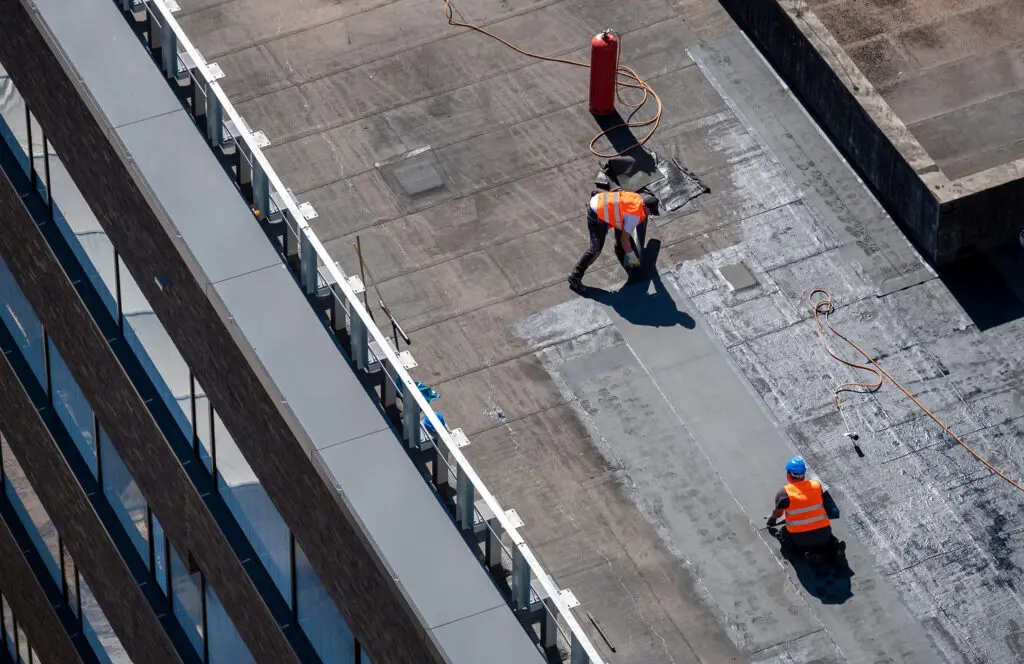
Property managers evaluating commercial flat roof repair tend to ask the same questions. Here are direct answers.
How often should a commercial flat roof be inspected?
Twice per year is the standard recommendation, typically spring and fall, plus after any significant storm event involving hail or high winds. Spring inspections catch damage from ice dam formation and freeze-thaw cycling. Fall inspections prepare the roof for winter loading. Catching small issues during routine inspections is consistently less expensive than emergency repair after a failure.
How long does commercial flat roof repair take?
Most straightforward commercial flat roof repairs are completed in one day. Larger repairs involving significant membrane area, deck work, or complex flashing fabrication may take two to three days. Emergency repairs to stop active leaks are typically addressed within 24 to 48 hours of contact with Badgerland Exteriors.
Does commercial roof repair require a permit in Wisconsin?
Minor repairs typically do not require a permit. More significant work involving membrane replacement over a large area or structural components may. Badgerland Exteriors confirms permit requirements for every commercial project before work begins and handles the permit process on your behalf when required.
Can a commercial flat roof be repaired in winter?
Yes, with limitations. Cold temperatures affect adhesive cure times and membrane flexibility, and some repair methods are not suitable in freezing conditions. Emergency repairs to stop active water infiltration are performed year-round. Non-urgent repairs involving membrane patches or seam work are typically scheduled for above-freezing conditions when possible.
What is the difference between TPO and EPDM repair?
TPO is repaired using heat welding; a hot-air gun fuses new membrane material to the existing surface, creating a bond as strong as the original. EPDM is typically repaired using contact cement and seam tape, as it cannot be heat-welded. Both systems can be repaired effectively when the repair is done correctly and the surrounding membrane is sound.
Stop Small Problems Before They Become Big Ones
Badgerland Exteriors has been delivering expert commercial roof repair for commercial properties and industrial buildings in Stoughton and across central Wisconsin since 2009. Our team provides expert commercial roof repair, free on-site assessments, responds within 24 to 48 hours of first contact, and delivers written documentation of all findings so you have a clear record of your roof’s condition.
Schedule your free commercial roof inspection with Badgerland Exteriors today.
Recent Articles
Read the Badger Blog
Let’s Get Started
Fix Your Roof the Badger Way
Got a question? Want to learn more about your options when it comes to caring for your home exterior? Our team is standing by with the information you need to start you roof replacement project today!