
Fiber Cement Siding Benefits: Why More Homeowners Are Making the Switch
10 Min Read
POSTED 04.08.2026
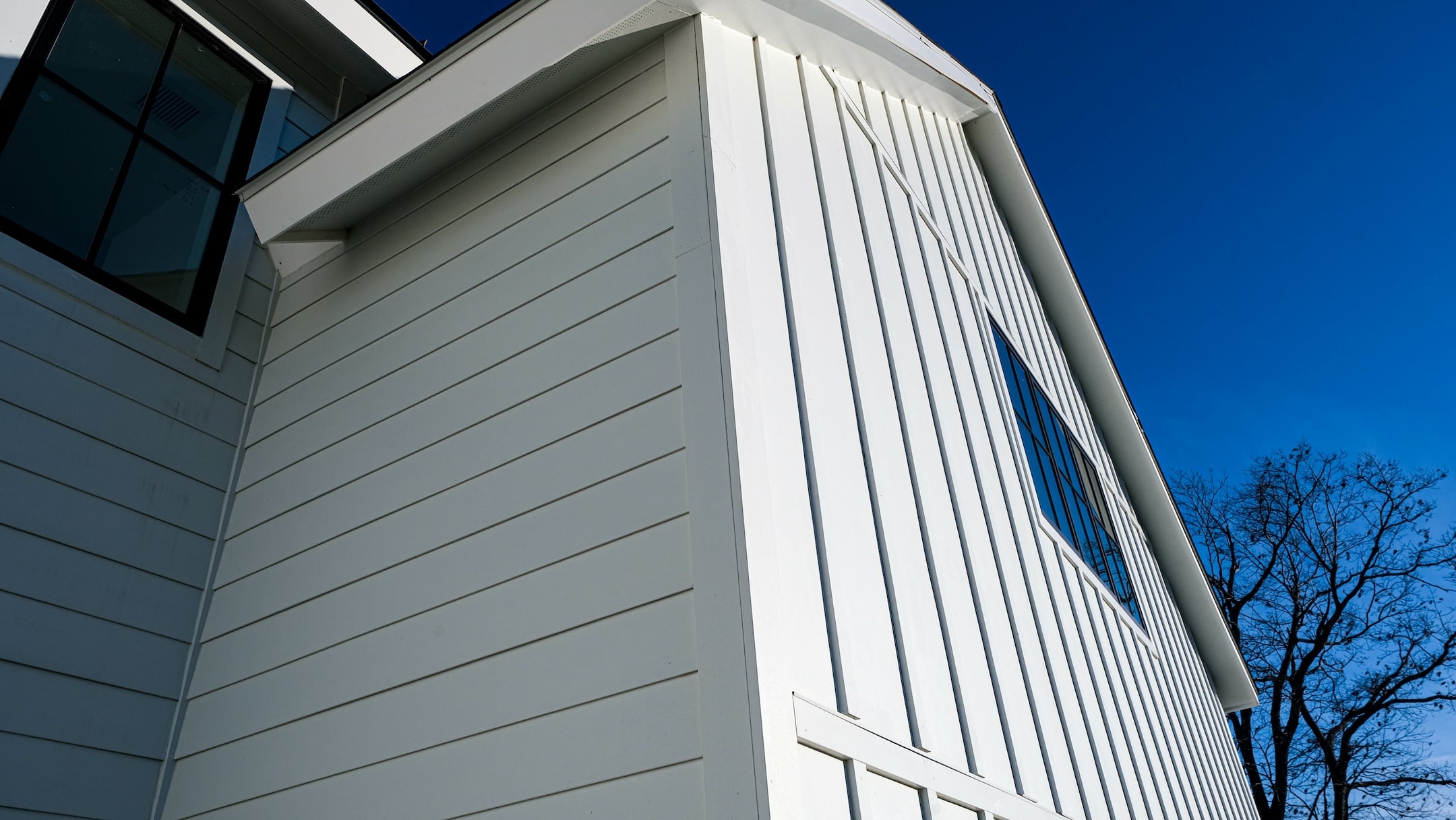
Fiber cement siding benefits have made it one of the fastest-growing siding materials in residential construction. Homeowners who have spent years painting wood siding, replacing warped vinyl panels, or patching pest damage are increasingly choosing fiber cement when it’s time for a new exterior. The material holds up in ways that vinyl and wood often don’t, and the long-term economics tend to favor it even though the upfront cost runs higher. If you’re weighing your options for a siding project, see what exterior siding services look like for Wisconsin homeowners before you commit to a material.
Here is what this guide covers:
- What fiber cement siding is and how it’s made
- The core benefits that make homeowners switch
- How fiber cement compares to vinyl, wood, and engineered wood
- What the installation process involves and why it matters
- What fiber cement siding costs and what ROI to expect
- Common questions homeowners ask before choosing
What Fiber Cement Siding Is
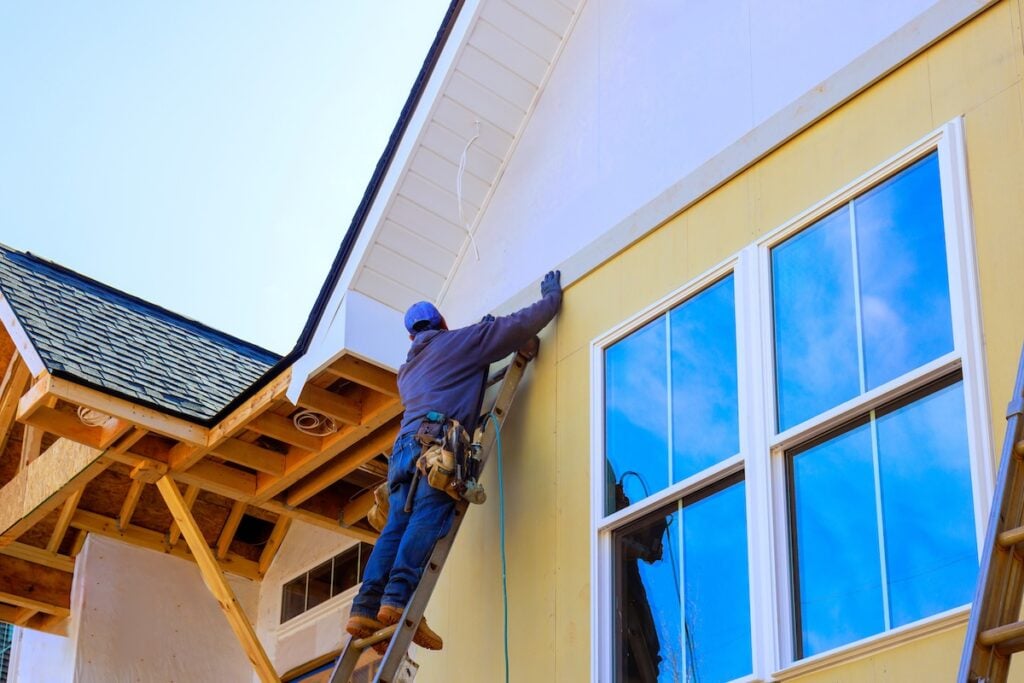
Fiber cement is a composite material made from a mixture of cement, sand, and cellulose fibers. The combination produces a panel that is dimensionally stable, non-combustible, and resistant to the moisture and temperature cycles that break down wood and degrade vinyl over time. It can be manufactured to mimic wood lap siding, cedar shingles, board and batten, and other profiles with a level of detail that vinyl typically can’t match.
According to the 2025 Remodeling Cost vs. Value Report, fiber cement siding replacement adds an average of $24,420 to a home’s value and delivers a return on investment exceeding 100 percent in many markets, making it one of the highest-ROI exterior improvements a homeowner can make. That number reflects both the material’s durability and the curb appeal premium it commands with buyers.
7 Key Fiber Cement Siding Benefits
These are the reasons homeowners increasingly choose fiber cement over alternatives when replacing their home’s exterior.
1. Durability in Harsh Weather Conditions
Fiber cement handles freeze-thaw cycling, hail impact, wind-driven rain, and UV exposure better than most competing materials. It doesn’t crack under thermal expansion, doesn’t warp when wet, and doesn’t become brittle in cold temperatures the way vinyl does. For Wisconsin homeowners dealing with hail seasons, ice dams, and temperature swings from below zero to the 90s, this durability profile is a practical advantage that shows up over the years in reduced repair costs and longer service life.
- Impact resistance: Fiber cement holds up under hail and debris impact without denting or fracturing the way vinyl does.
- Moisture resistance: The material doesn’t absorb water at the surface level, and proper installation with housewrap prevents moisture from working behind the panels.
- Temperature stability: Unlike vinyl, fiber cement doesn’t soften in high heat or become brittle in extreme cold.
- Wind resistance: Properly fastened fiber cement panels are rated for high wind speeds and don’t lift or buckle in storm conditions.
2. Fire Resistance
Fiber cement is non-combustible. It doesn’t feed flames, doesn’t melt, and doesn’t release toxic gases in a fire. For homeowners in areas with wildfire risk or those seeking lower homeowner’s insurance premiums, this property is meaningful. Some insurance carriers offer premium reductions for homes clad in non-combustible exterior materials. Even in Wisconsin, where wildfires aren’t a primary concern, the fire resistance of fiber cement is a genuine structural protection benefit.
- Non-combustible classification: Fiber cement won’t ignite from direct flame exposure.
- No toxic off-gassing: Unlike some synthetic materials, it doesn’t release harmful gases in fire conditions.
- Insurance implications: Some carriers discount premiums for homes with non-combustible siding.
3. Low Maintenance Requirements
Wood siding requires repainting every five to seven years, caulking inspection annually, and prompt attention to any moisture infiltration that leads to rot. Vinyl requires less maintenance but can fade, crack under impact, and isn’t paintable when homeowners want a color change. Fiber cement is paintable, holds paint longer than wood, and doesn’t require the same maintenance cycle. Repainting fiber cement typically happens every 10 to 15 years under normal conditions.
- Long paint life: Factory-primed or pre-finished fiber cement holds paint significantly longer than bare wood.
- No rot or pest damage: The material is not a food source for insects and doesn’t rot when properly installed and sealed.
- Paintable surface: Unlike vinyl, fiber cement can be repainted when homeowners want to change color.
4. Aesthetic Versatility
Fiber cement is available in a wide range of profiles and textures that convincingly replicate natural wood, cedar shakes, board and batten, and smooth panels. The dimensional detail of fiber cement profiles tends to read as more substantial than vinyl alternatives, which matters for curb appeal and perceived home quality. For homeowners who want a wood aesthetic without the maintenance demands, fiber cement is the standard solution.
- Wood-look profiles: Lap siding, shakes, and vertical panels that closely mimic natural wood grain.
- Consistent appearance: Unlike real wood, fiber cement doesn’t have knots, grain variation, or defects that affect finished appearance.
- Color retention: Factory finishes are engineered to resist fading longer than paint applied to raw wood.
5. Pest and Rot Resistance
Wood siding, regardless of species or treatment, is vulnerable to termites, carpenter ants, woodpeckers, and moisture-driven rot. Fiber cement provides none of the organic material those pests require. Homeowners who have dealt with repeated pest damage to wood siding find fiber cement a permanent solution to a recurring problem. In Wisconsin, where moisture cycling is aggressive, the rot resistance of fiber cement is particularly relevant at foundation transitions and around window and door openings.
- Termite resistant: No organic material for insects to consume.
- Woodpecker deterrent: The density and hardness of fiber cement make it an unattractive target.
- Moisture-resistant composition: When properly sealed at joints and penetrations, it doesn’t develop rot at vulnerable transition points.
6. Sound Dampening
Fiber cement’s density gives it better sound dampening properties than vinyl or thin wood siding. Homes on busy streets, near airports, or in noise-affected areas benefit from the additional mass fiber cement adds to the exterior wall assembly.
7. Long Lifespan and Strong Resale Value
Fiber cement is typically warranted by manufacturers for 30 to 50 years and realistically lasts as long when properly installed and maintained. That lifespan, combined with its aesthetic appeal and the ROI data from the Cost vs. Value Report, makes it a material that pays off both while you’re living in the home and when you sell.
- 30 to 50 year expected lifespan: Among the longest of any residential siding material.
- High resale premium: Buyers recognize the quality signal fiber cement sends and are willing to pay for it.
- Manufacturer warranties: Major fiber cement manufacturers back their products with long-term non-prorated warranties.
Fiber Cement vs. Other Siding Materials
| Material | Lifespan | Maintenance | Fire Resistant | Paintable | Avg. ROI |
| Fiber Cement | 30–50 years | Low | Yes | Yes | 77–100%+ |
| Vinyl | 20–40 years | Very Low | No | No | 70–80% |
| Wood | 20–40 years | High | No | Yes | Varies |
| Engineered Wood (LP SmartSide) | 30–50 years | Low | Treated | Yes | Strong |
| Steel/Metal | 40–70 years | Low | Yes | Yes | Varies |
Badgerland Exteriors primarily installs LP SmartSide engineered wood composite siding, which shares many of the same benefits as fiber cement: comparable durability, low maintenance, paintability, and strong performance in Wisconsin’s climate, at a competitive price point. LP SmartSide is treated to resist moisture, impact, and fungal decay, making it a strong alternative for homeowners who want fiber cement’s performance characteristics with a product that is widely proven in northern climates.
We’re proud to serve homeowners in Madison, WI, and nearby communities with siding installation, siding repair, and complete exterior services.
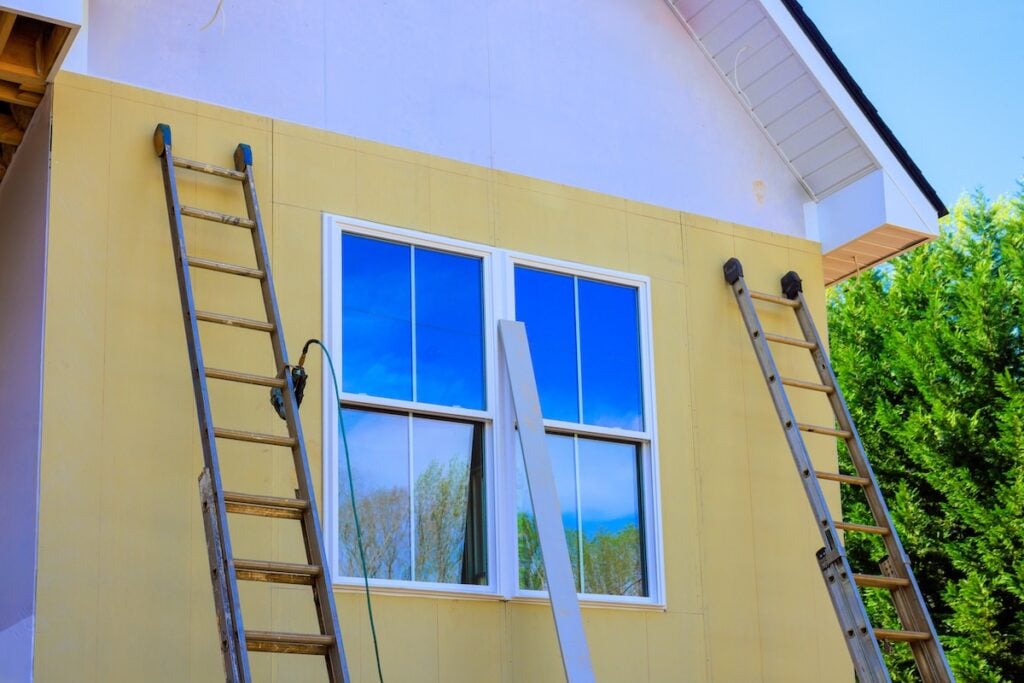
What Fiber Cement Installation Involves
Fiber cement is heavier than vinyl and requires more care in handling and fastening. The quality of the installation determines whether the material’s benefits are fully realized.
- Housewrap and moisture barrier: Fiber cement performance depends on what’s behind it. Proper housewrap installation is a prerequisite for any fiber cement project.
- Flashing at all openings: Windows, doors, and penetrations require precise flashing to prevent moisture from working behind panels at the most vulnerable points.
- Fastening and clearances: Fiber cement must be fastened correctly and installed with proper clearance from grade, rooflines, and trim. Incorrect clearances are one of the most common installation errors.
- Caulking and joint sealing: All joints, butt ends, and trim intersections are sealed to prevent moisture infiltration at panel edges.
- Painting or finishing: Bare fiber cement must be primed and painted on-site if not pre-finished. Factory-finished products reduce this step but still require touch-up at cut edges.
What Fiber Cement Siding Costs
Fiber cement siding installation typically runs between $6 and $13 per square foot installed, depending on the profile, finish, and regional labor costs. For a typical Wisconsin home, a full siding replacement in fiber cement runs between $12,000 and $25,000. LP SmartSide engineered wood is generally priced comparably, making it a strong alternative for homeowners evaluating the same performance tier.
The higher upfront cost relative to vinyl is offset over time by lower maintenance costs, longer lifespan, and the resale premium fiber cement commands. Homeowners who plan to stay in their homes for more than five to ten years consistently find the math works in fiber cement’s favor.
Frequently Asked Questions About Fiber Cement Siding
Homeowners evaluating fiber cement tend to ask the same questions before committing. Here are direct answers.
How long does fiber cement siding last?
Properly installed and maintained fiber cement siding typically lasts 30 to 50 years. Most major manufacturers back it with 30-year non-prorated warranties. The actual lifespan depends on installation quality, climate exposure, and how consistently the surface is repainted when needed.
Is fiber cement siding worth the extra cost over vinyl?
For most homeowners, yes. Fiber cement lasts longer, requires less maintenance over its lifespan, commands a higher resale premium, and doesn’t have the impact vulnerability or color-fading issues that affect vinyl. The upfront cost difference narrows significantly when total cost of ownership over 30 years is calculated.
Does fiber cement siding hold up in Wisconsin winters?
Yes. Fiber cement’s composition makes it dimensionally stable through freeze-thaw cycles. It doesn’t expand and contract as dramatically as vinyl in temperature extremes, which means joints stay tighter and paint adhesion holds longer. Proper installation with adequate clearances from grade and rooflines is important to prevent moisture-related issues at transition points.
Can fiber cement siding be painted any color?
Yes. Fiber cement accepts paint well and holds it significantly longer than bare wood. Factory-finished products come in a range of colors, and site-painted fiber cement can be any color a homeowner chooses. Repainting every 10 to 15 years is the typical maintenance interval.
What is the difference between fiber cement and LP SmartSide?
Fiber cement is made from cement, sand, and cellulose fibers. LP SmartSide is an engineered wood composite made from wood strands treated with zinc borate and overlaid with a resin-impregnated overlay. Both are designed to outperform natural wood in durability and moisture resistance. LP SmartSide is generally lighter than fiber cement, easier to work with in cold temperatures, and comparably priced. Both are strong performers in Wisconsin’s climate.
Ready to Upgrade Your Home’s Exterior? Talk to Badgerland Exteriors
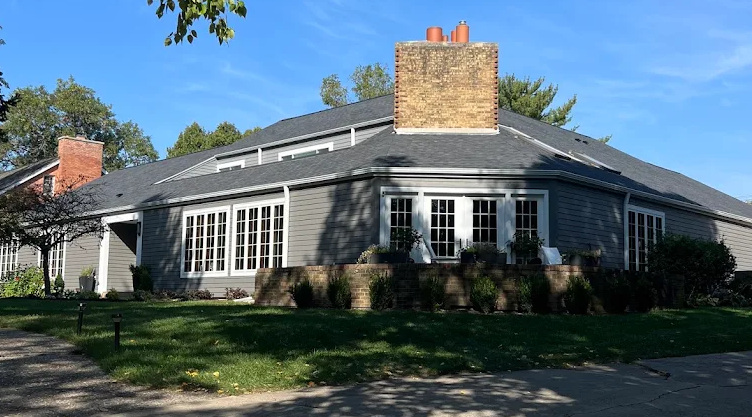
Fiber cement and engineered wood composite siding are both strong upgrades from aging vinyl or wood, often paired with the benefits of metal roofing for a full exterior refresh. Badgerland Exteriors has been helping Madison homeowners and their neighbors across central Wisconsin choose and install the right exterior siding since 2009. We work primarily with LP SmartSide, an engineered wood composite that delivers fiber cement-level performance at a competitive price. Free estimates are available and our team can typically reach your property within 24 to 48 hours.
Claim your free siding estimate from Badgerland Exteriors today.

Recent Articles
Read the Badger Blog
Let’s Get Started
Fix Your Roof the Badger Way
Got a question? Want to learn more about your options when it comes to caring for your home exterior? Our team is standing by with the information you need to start you roof replacement project today!
