What Causes Ice Dams on Roofs (And How to Stop Them)
9 Min Read
POSTED 08.10.2026
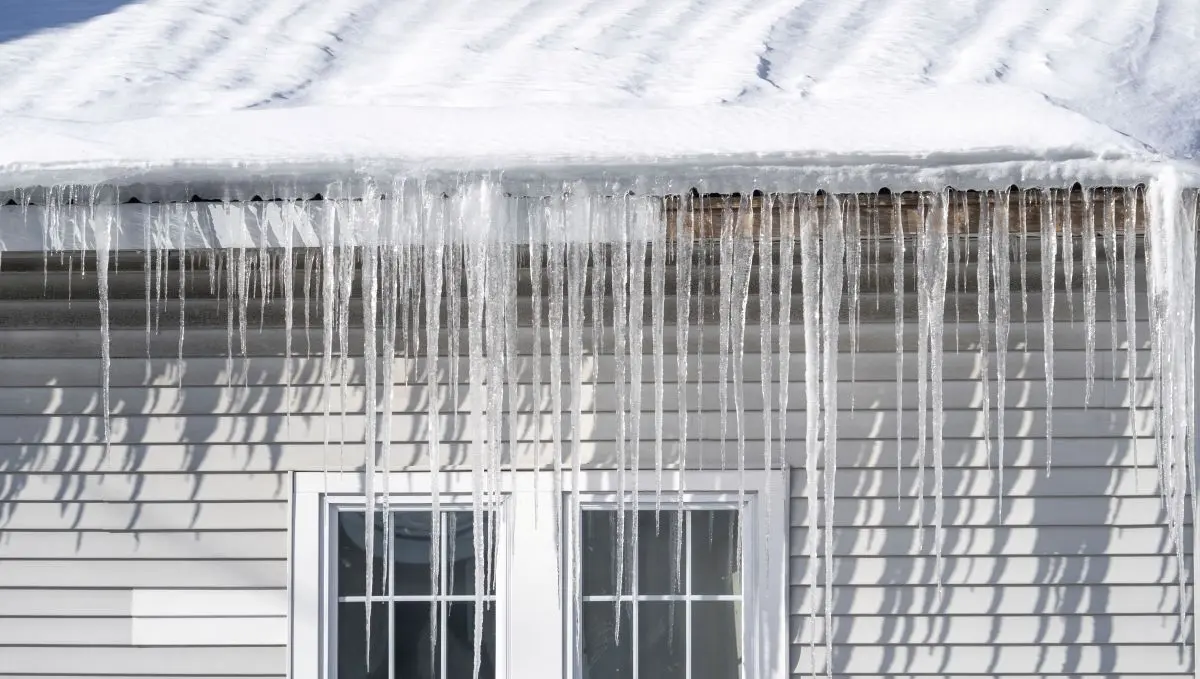
What causes ice dams is not the winter weather itself; it’s the interaction between the warm air escaping from your home and the cold air outside. Ice dams form when heat from inside the house melts snow on the upper portion of the roof, meltwater runs down toward the colder eaves, and refreezes into a ridge of ice that traps additional water behind it. Once that water has nowhere to go, it works under shingles and into the attic, walls, and ceilings below. For Wisconsin homeowners, ice dams are one of the most common and costly winter roofing problems, and preventing them starts with understanding the mechanism that creates them. If you’ve had ice dam damage recently and need a professional assessment, storm damage inspection from a contractor who understands cold-climate roofing is the right first step.
Here is what this guide covers:
- The 3 core conditions that cause ice dams
- Why some Wisconsin homes get ice dams every winter and others don’t
- How to prevent ice dams before winter arrives
- What to do when an ice dam has already formed
- Common signs of ice dam damage inside the home
- Common questions Wisconsin homeowners ask about ice dams
The Science Behind Ice Dam Formation
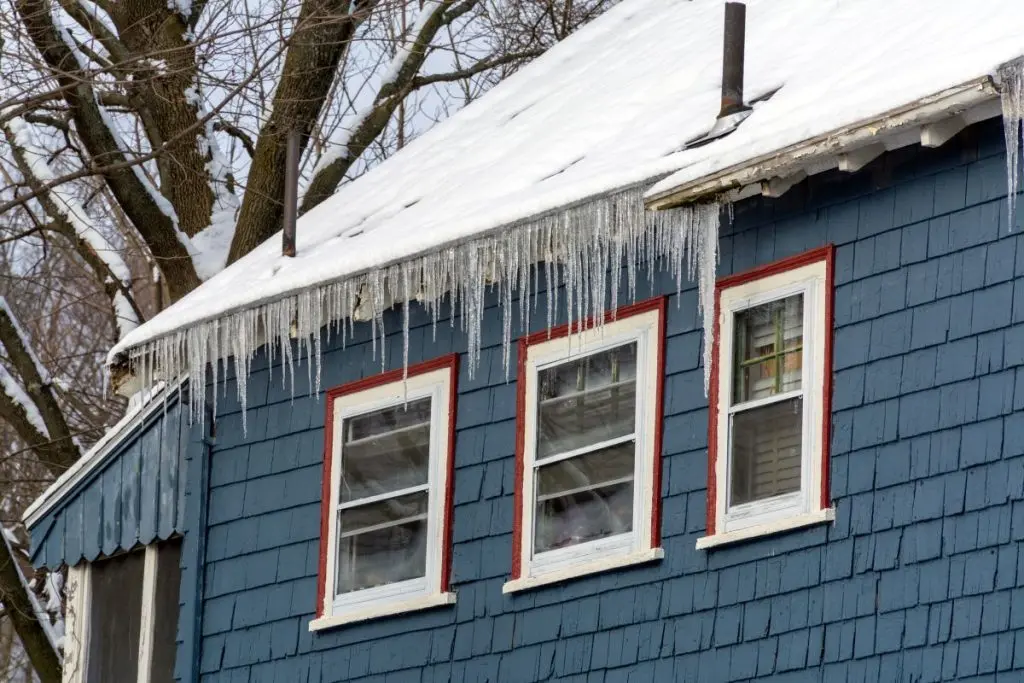
Understanding how ice dams form is the foundation of preventing them. According to the University of Minnesota Extension, an ice dam is a ridge of ice that forms at the edge of a roof and prevents melting snow from draining, and moisture entering the home through ice dams can lead to the growth of mold and mildew that cause respiratory problems. The temperature difference between the upper roof and the eaves is what drives the entire cycle.
For an ice dam to form, three conditions have to line up:
- Snow cover on the roof (typically 6 inches or more)
- An upper roof surface temperature above 32°F (32 degrees Fahrenheit) that melts the snow
- An eave temperature below 32°F that refreezes the meltwater
Wisconsin’s winters deliver all three conditions repeatedly from December through March. The homes that avoid ice dams are the ones where the second condition, the warm upper roof, has been addressed through proper insulation and ventilation.
We’re proud to serve homeowners in Middleton, WI, and nearby communities with roof inspections, ice dam damage assessments, and full roof replacement services.
3 Root Causes of Ice Dams
Every ice dam traces back to one or more of these three underlying problems. Solving the ice dam problem long-term means solving the underlying cause, not just clearing the ice each winter.
1. Warm Air Escaping Into the Attic
The single biggest cause of ice dams is heated air from the living space leaking into the attic through gaps, penetrations, and unsealed openings. Once that warm air is in the attic, it heats the roof deck from below, which melts the snow above. Common leak points include recessed light fixtures, plumbing penetrations, attic hatches, chimney chases, and gaps around ductwork.
- Where to look: In the attic, inspect around every penetration through the ceiling below and every transition where different building components meet. Air leaks are often visible as staining on insulation where warm air has been passing through.
- What to do: Sealing air leaks with appropriate caulk, spray foam, or weatherstripping is the highest-impact single fix for most ice dam problems.
2. Inadequate Attic Insulation
Even with air leaks sealed, insufficient insulation allows heat to conduct through the ceiling and warm the attic. Wisconsin building code recommends R-49 to R-60 insulation in most attic applications. Older homes frequently have R-19 to R-30, which is dramatically undersized for our climate.
- How to check: Measure the depth of your existing insulation. Fiberglass batts should be 16 to 20 inches deep for R-49 to R-60. Blown-in insulation should be 14 to 18 inches deep depending on the type.
- What to do: Adding blown-in cellulose or fiberglass on top of existing insulation is a straightforward upgrade that pays for itself in energy savings alone, before considering the ice dam prevention benefit.
3. Insufficient Attic Ventilation
Even a well-insulated attic needs proper ventilation to keep the roof deck cold. Ventilation works by allowing cold outdoor air to circulate through the attic, keeping the roof surface at outdoor temperature. Wisconsin building code requires balanced ventilation with intake vents (typically soffit vents) and exhaust vents (ridge or gable vents) working together.
- How to check: From inside the attic on a warm day, feel around the soffit vents for air movement. From outside, confirm that soffit vents are unobstructed and ridge or gable vents are intact.
- What to do: If soffit vents are blocked by insulation, install baffles that maintain a clear airflow channel. If ridge vents are missing or damaged, a professional can add them during any roof project.
Why Some Wisconsin Homes Get Ice Dams and Others Don’t
Two identical houses on the same street can have completely different ice dam experiences based on how well they’ve addressed the three root causes above. Several additional factors influence risk:
- Home age: Homes built before 1990 typically have less insulation and less consistent air sealing than newer construction, making them more prone to ice dams.
- Roof complexity: Homes with complex rooflines, valleys, dormers, and multiple pitches have more spots where snow melts unevenly and water refreezes.
- Sun exposure: South-facing slopes get more direct sunlight, which melts snow faster and can drive water toward colder north-facing eaves.
- Ice and water shield presence: Homes with proper ice and water shield installed under the shingles at eaves and valleys are far better protected against interior water damage even when ice dams form.
- Snow accumulation: Deeper snow acts as an insulator, keeping heat from escaping through the roof deck. Ice dams often form worst during and after heavy snowfall events.
How to Prevent Ice Dams Before Winter
The most effective ice dam prevention happens before the first snowfall. Fall is the right time to address the root causes. Waiting until January means you’re dealing with symptoms, not causes.
- Air seal the attic floor: Have a professional air sealing contractor or roofer identify and seal all penetrations through the ceiling into the attic.
- Bring insulation up to R-49 to R-60: Add insulation where needed to meet or exceed code recommendations for Wisconsin’s climate zone.
- Confirm ventilation is balanced: Check that soffit vents are clear, baffles are in place, and ridge or gable vents are intact and unobstructed.
- Install ice and water shield during any roof project: Wisconsin building code requires ice and water shield at eaves and in valleys on most residential roofing installations. If your roof pre-dates this requirement, adding it during your next roof replacement is one of the best long-term ice dam damage protections available.
- Trim overhanging branches: Snow and ice loaded branches contacting the roof can create localized warm spots that contribute to uneven melting.
What to Do When an Ice Dam Has Already Formed
If ice dam damage is happening this winter, act on the immediate problem first, then address the underlying cause in the offseason.
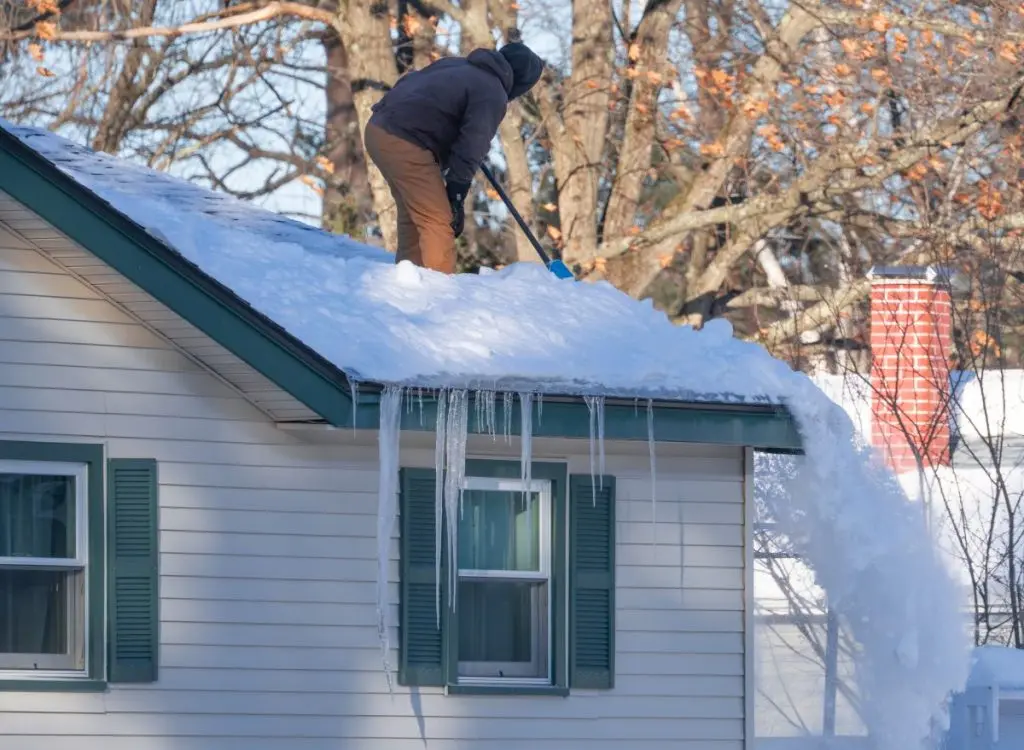
- Do not get on the roof: Ice-covered roofs are among the most dangerous surfaces a homeowner can encounter. Professional ice dam removal exists for a reason.
- Do not use rock salt or ice picks: Both damage shingles and gutters and don’t actually solve the underlying temperature problem.
- Use a roof rake from the ground: A long-handled roof rake pulls snow off the lower 3 to 4 feet of the roof from ground level, removing the fuel that feeds the ice dam without requiring roof access.
- Manage interior water damage: If water is already entering the home, place buckets, remove wet insulation, and document damage with photos for potential insurance claims.
- Call a professional for actual dam removal: Steam removal by a qualified contractor is the only method that removes ice without damaging shingles.
Frequently Asked Questions About Ice Dams
Wisconsin homeowners dealing with ice dam damage tend to ask the same questions. Here are direct answers.
Does homeowners insurance cover ice dam damage?
Most standard Wisconsin homeowners policies cover sudden water damage from ice dams under the same provisions that cover other storm-related interior water damage. Gradual moisture problems from repeated ice dam damage over multiple winters may be excluded as deferred maintenance. Documenting damage promptly and having a contractor assessment strengthens any claim.
Will heat cables prevent ice dams?
Heat cables can help in specific situations but are generally a treatment for symptoms rather than a solution for causes. They keep a narrow channel of the roof edge clear so water can drain, but they don’t address the underlying warm-attic problem that creates ice dams in the first place. Sealing, insulating, and ventilating is more effective long-term.
Can ice dams damage a new roof?
Yes. A new roof with proper ice and water shield is much better protected than an older roof, but ice dams can still lift shingles at the eaves, damage flashing, and force water through vulnerabilities that develop over time. Preventing ice dams is important on any roof, regardless of age.
How much does professional ice dam removal cost?
Professional steam removal in Wisconsin typically runs $300 to $1,500 depending on the size of the ice dam, roof height, and accessibility. Emergency removal during active water damage costs more than scheduled removal. Preventing ice dams through proper attic conditions is significantly cheaper than repeated removal costs.
Does Badgerland Exteriors help with ice dam damage?
Yes. Badgerland provides free roof inspections that identify ice dam damage and its underlying causes, and offers roofing solutions including proper attic ventilation assessment and ice and water shield installation during any roof replacement. We can typically reach your property within 24 to 48 hours of first contact.
Stop Ice Dams at the Source With Badgerland Exteriors
Ice dams are not a weather problem; they’re a building performance problem that shows up because of weather. Homes with proper air sealing, adequate insulation, and balanced ventilation don’t get ice dams in the same conditions that damage neighboring homes. Badgerland Exteriors has been helping Middleton homeowners and their neighbors across central Wisconsin address ice dam damage and prevent future problems since 2009, with free inspections, honest assessments, and roofing solutions built for Wisconsin winters.
Request your free roof assessment from Badgerland Exteriors today.
Recent Articles
Read the Badger Blog
Let’s Get Started
Fix Your Roof the Badger Way
Got a question? Want to learn more about your options when it comes to caring for your home exterior? Our team is standing by with the information you need to start you roof replacement project today!