
Signs You Need a New Roof: 10 Warning Signs Homeowners Shouldn’t Ignore
11 Min Read
POSTED 08.09.2026
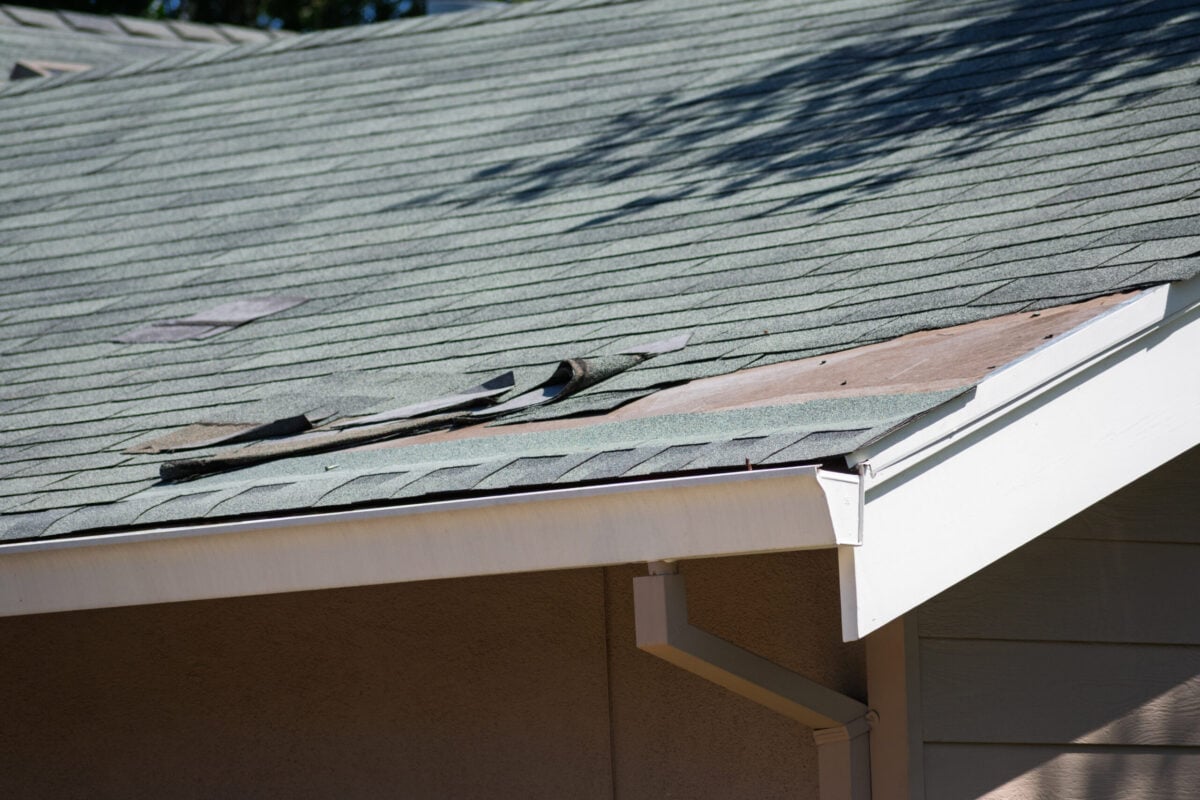
Most homeowners don’t know they need a new roof until water is dripping through the ceiling. By then the damage has spread beyond the shingles into the underlayment, decking, and insulation, and what could have been a manageable replacement has become a larger, more expensive problem. The signs you need a new roof appear well before that point, but they require knowing what to look for. This guide covers the ten most reliable warning signs, what each one means, and when to call a roofing contractor. If you’re seeing more than one of these signs, roof replacement may be closer than you think.
Here is what this guide covers:
- The 10 warning signs that indicate a new roof is needed
- What each sign tells you about the condition of your roofing system
- The difference between signs that warrant repair versus full replacement
- What a roof replacement costs and what to expect
- Common questions homeowners ask before replacing a roof
Why Waiting Costs More Than Acting
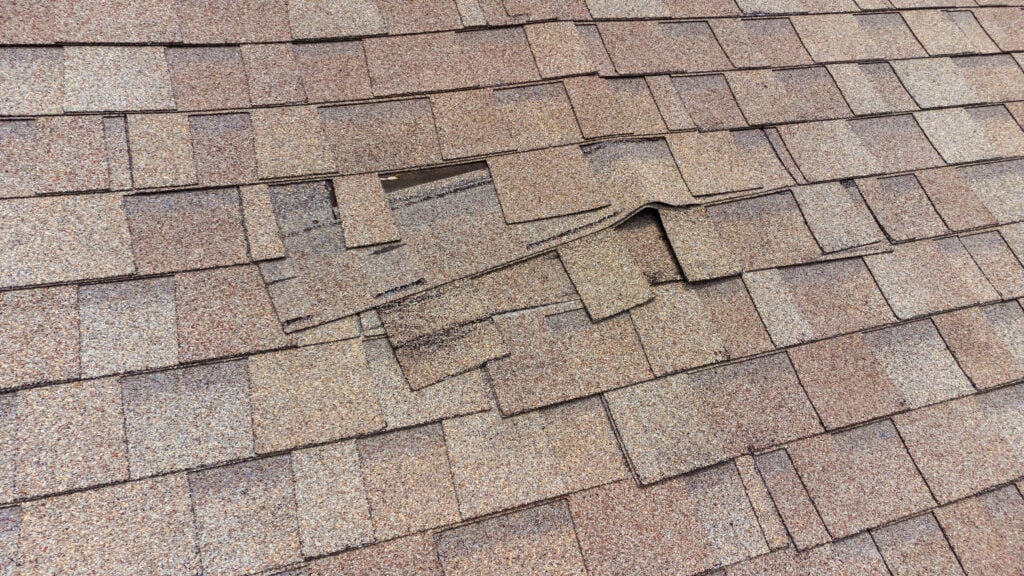
Roofs don’t fail overnight. They send signals for months or years before a full failure occurs. The problem is that most of those signals are subtle enough to dismiss, a granule here, a slightly curled shingle there, until enough of them stack up that the roof can no longer do its job.
According to InterNACHI’s Standard Estimated Life Expectancy Chart for Homes, asphalt shingles have an expected lifespan of 20 to 30 years, and once a roof approaches that threshold, every additional year of delay increases the likelihood of water infiltration and structural damage. For Wisconsin homeowners, that window narrows further because freeze-thaw cycling, ice dam formation, and repeated hail exposure all accelerate the aging process. Acting at the first clear sign, rather than at the point of failure, is almost always the financially smarter decision.
10 Warning Signs You Need a New Roof
These are the ten signs that most reliably indicate a roof is approaching the end of its useful life or has already passed it.
1. Your Roof Is 20 Years Old or Older
Age is the single most reliable predictor of roof failure. Architectural roof shingles, the most common material on Wisconsin homes, are rated for 25 to 30 years, but real-world conditions in this climate often result in effective lifespans closer to 20 to 25 years. A 20-year-old roof that looks fine from the street may be brittle, losing granule protection, and providing significantly less resistance to wind and impact than its roofing materials were designed to deliver.
- What to do: Have a professional roof inspection done to assess its remaining useful life. If you don’t know the roof’s age, a professional can estimate it based on material condition.
- When it tips toward replacement: Any roof over 20 years showing additional warning signs from this list is a strong replacement candidate.
2. Shingles Are Curling or Cupping
Curling shingles (where the edges lift upward) and cupping shingles (where the center pushes down while edges raise) both indicate that the shingles have lost their dimensional stability. This happens as asphalt dries out and loses flexibility over time, as a result of inadequate attic ventilation trapping heat beneath the roof deck, or as the shingles near the end of their rated lifespan.
- Curling is a moisture absorption issue: Shingles curl when the underside absorbs moisture from a poorly ventilated attic.
- Cupping is a weathering issue: The top surface ages faster than the bottom, causing the shingle to cup upward at the edges.
- Both conditions allow wind uplift: Curled and cupped shingles catch wind at their edges and are at high risk of being lifted or torn off in a storm.
3. Granule Loss Is Widespread
Asphalt shingles use granules, small mineral particles embedded in the surface, to protect the asphalt layer from UV degradation and to provide the shingle’s impact resistance. New shingles shed some granules in the first year as excess granules settle. Granule loss on an older roof is a different signal: the shingle is losing its protective surface and becoming increasingly vulnerable.
- Where to look: Check gutters and downspouts for granule accumulation after rain events. Look at the shingle surface for bare, exposed patches where granules have worn away.
- What it means: Widespread granule loss indicates the shingle is reaching the end of its protective life, even if it isn’t visibly cracked or missing.
4. Missing or Broken Shingles
Individual missing shingles after a wind event may be a simple repair. Multiple missing shingles in different areas, or broken shingles with widespread fracturing, are a different signal. They indicate either that the shingles have become brittle with age and are failing across the roof, or that the fastener integrity of the system is compromised.
- One area, recent wind event: Likely a repair.
- Multiple areas, no obvious storm event: Indicates systemic deterioration and points toward replacement.
- Broken rather than wind-lifted: Brittle shingles that crack rather than lift cleanly indicate age-related failure.
5. Daylight Visible in the Attic
Standing in the attic during daylight and seeing light coming through the roof boards means there are gaps in the roofing system. Even small gaps allow water infiltration and indicate that the roof’s continuity has been broken. This is an urgent sign that requires professional attention immediately.
- Also check for: Water stains on attic framing, wet or discolored insulation, and mold growth on the underside of the roof deck. These indicate moisture has been entering through the gaps.
6. Sagging Roof Deck
A roof deck that sags, dips, or has a wavy appearance is no longer structurally sound. This typically indicates that moisture has been getting into the decking for long enough to cause rot, or that the underlying rafters or trusses have been compromised. A sagging roof deck is one of the most serious structural warning signs a homeowner can observe.
- Visible from outside: Stand back from the home and sight along the roofline. A straight roofline that dips or sags in sections indicates deck problems.
- Visible from inside: Soft, spongy areas when walking in the attic or visible bowing of the deck from below.
- Urgency: A sagging roof deck warrants an immediate professional assessment. It is not a condition to monitor over time.
7. Interior Water Stains or Active Leaks
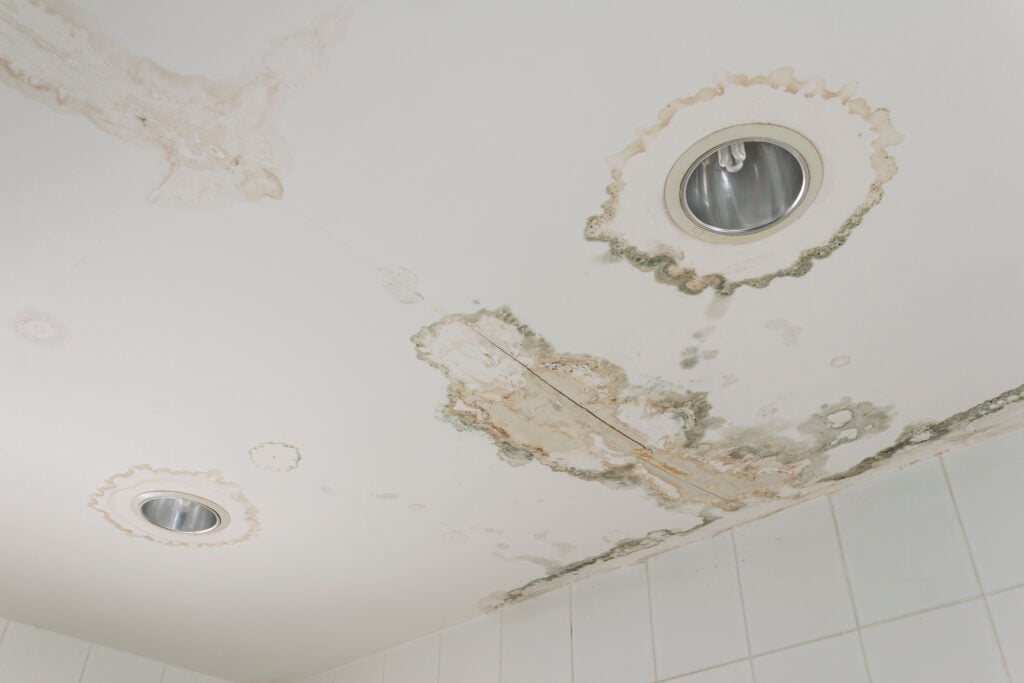
Roof leaks and water stains on ceilings or upper walls are one of the most common ways homeowners first notice a roof problem. The important thing to understand is that the stain rarely appears directly below the leak entry point; water travels along rafters, sheathing, and insulation before dripping through the finished ceiling. A single stain may indicate a small, repairable issue; multiple stains in different areas typically indicate a more systemic problem.
- What to check: Identify all stains, note whether they’re growing, and inspect the attic directly above each one.
- Active dripping during rain: Treat as urgent. Every additional rain event spreads the damage further.
8. Flashing Failures
Flashing is the metal sealing at chimneys, skylights, vents, valleys, and wall transitions. It’s the most common source of leaks on roofs that are otherwise in reasonable condition, and it deteriorates faster than the shingles around it. Cracked, lifted, or missing flashing creates a direct water pathway into the wall or attic assembly.
- Signs of flashing failure: Water stains appearing near chimneys, skylights, or vents; visible rust or separation at metal flashing; caulk that has pulled away from transition points.
- Flashing failure on an older roof: If the roof is near end of life and flashing is failing, replacement is usually more cost-effective than repeated flashing repairs.
9. Moss, Algae, or Biological Growth
Moss and algae on a roof are more than cosmetic. Moss retains moisture against the shingle surface, accelerating granule loss and freeze-thaw damage. Algae creates dark streaking and, while primarily cosmetic at first, indicates persistent moisture conditions on the roof surface.
- Moss is more serious than algae: Moss roots can work under shingles and lift their edges.
- Heavy moss growth on an older roof: Indicates the shingles have been holding moisture for an extended period, which accelerates deterioration.
- Treatment vs. replacement: On a newer roof, moss can be treated and managed with regular roof maintenance. On an older roof with additional warning signs, treatment masks a deeper problem.
10. Significantly Higher Energy Bills
A failing roof loses its ability to support the thermal performance of the home. When shingles are brittle or missing, when attic ventilation is compromised, or when moisture has damaged attic insulation, heating and cooling systems work harder to maintain comfortable temperatures.
- How to check: Compare energy bills year-over-year. A consistent upward trend without a change in usage patterns may indicate the roof’s insulating performance is declining. Peeling paint on interior ceilings or walls near the roofline is another indicator worth noting alongside rising energy costs.
- Combined with other signs: A spike in energy costs alongside granule loss, curling shingles, or age approaching 20 years is a strong indicator that the roofing system as a whole is underperforming.
We’re proud to serve homeowners in Fitchburg, WI, and nearby communities with roof replacement, inspections, and free on-site estimates.
How Many Signs Does It Take?
One sign in isolation may indicate a repairable issue. Two or more signs together, particularly when age is one of them, almost always indicate that replacement is the more cost-effective long-term decision. A roof inspection is the definitive way to assess your roof’s condition and get an honest answer about where it stands.
Badgerland Exteriors provides free roof estimates for Fitchburg homeowners and across central Wisconsin. Our team evaluates the full roofing system, not just the visible surface, and gives you a straight answer about what your roof actually needs.
What a Roof Replacement Costs in Wisconsin
For most Wisconsin homes using architectural asphalt shingles, a full roof replacement runs between $10,000 and $18,000 depending on roof size, pitch, and the condition of the decking beneath the existing shingles. Larger homes, steep pitches, and significant decking repairs push costs toward the upper end or beyond. Metal roofs and premium materials push higher still.
Badgerland Exteriors installs Atlas Pinnacle Pristine architectural shingles as its primary product, which carries strong wind and impact ratings suited to Wisconsin’s climate. Financing is available through Acculynx for qualified homeowners, and all full roof replacements are backed by a 10-year workmanship warranty.
Frequently Asked Questions About Signs You Need a New Roof
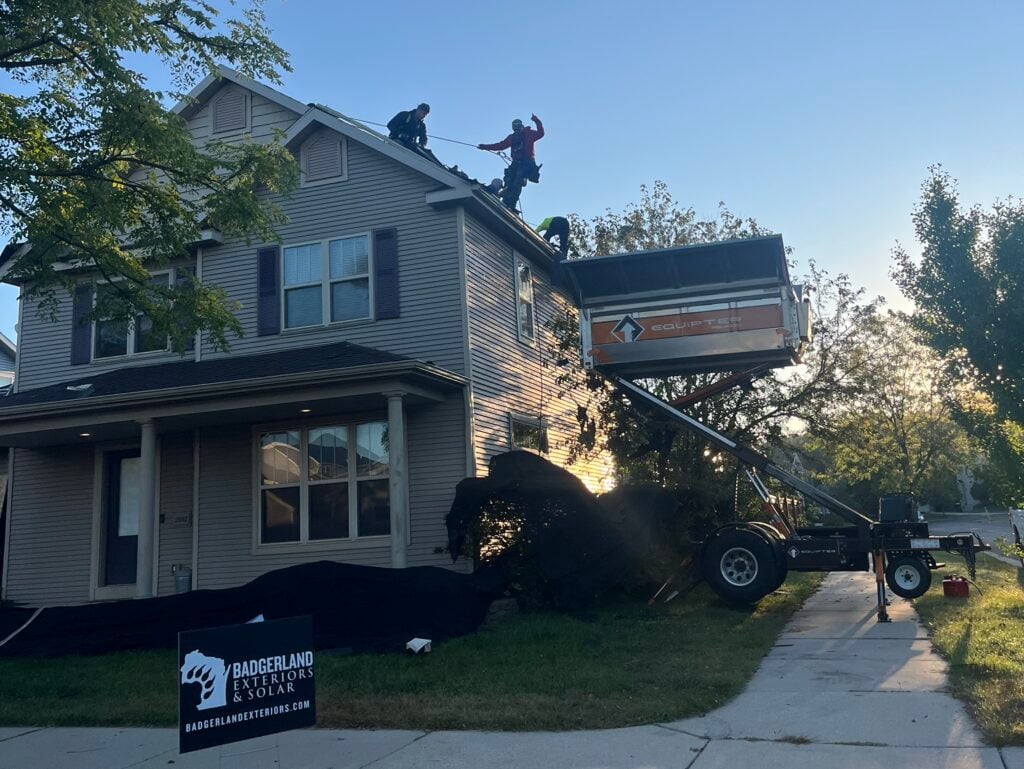
Homeowners noticing warning signs tend to ask the same questions before calling a contractor. Here are direct answers.
Can I repair instead of replacing the whole roof?
Repair is the right answer when damage is isolated, the surrounding roof is structurally sound, and the roof is not approaching its end of life. When multiple warning signs are present, when the roof is 20 or more years old, or when moisture has reached the decking or attic framing, replacement is typically the more cost-effective decision over a 5-year horizon, avoiding the cycle of costly repairs that add up without solving the underlying problem.
How do I know how old my roof is?
If you don’t have records from the original installation or a prior sale disclosure, a roofing contractor can estimate age based on the material’s condition, granule wear, and construction characteristics. Badgerland Exteriors provides this as part of every free estimate visit.
Is it worth replacing a roof before selling a home?
In most cases, yes. A failing or aging roof is one of the most common buyer objections and a frequent source of inspection-based price renegotiations. A new roof eliminates that objection, can increase appraisal value, and signals to buyers and insurance companies alike that the home has been maintained. The return on investment is meaningful, particularly in a competitive market.
How long does a roof replacement take?
Most standard residential roof replacements in Wisconsin are completed in one day for homes with straightforward rooflines and asphalt shingles. Larger homes, steep pitches, or roofs requiring significant decking repair may take two days. Badgerland Exteriors provides a realistic timeline at the estimate stage.
What happens if I ignore these warning signs?
Each warning sign represents a roof that is providing less protection than it should. Water that gets past deteriorating shingles doesn’t stop at the underlayment; it works into the decking, insulation, and eventually the framing and interior finishes. A $12,000 roof replacement deferred for two years can easily become a $15,000 to $20,000 project once decking replacement, mold remediation, and interior repairs are added.
Don’t Wait for a Leak to Find Out Your Roof Is Failing
Recognizing the signs early is the difference between a planned roof replacement and an emergency one. Badgerland Exteriors has been helping homeowners in Fitchburg and across central Wisconsin assess and replace roofs since 2009. Free estimates, free storm damage inspections, and honest assessments that put your interests first.
Schedule your free roof assessment with Badgerland Exteriors today.
Recent Articles
Read the Badger Blog
Let’s Get Started
Fix Your Roof the Badger Way
Got a question? Want to learn more about your options when it comes to caring for your home exterior? Our team is standing by with the information you need to start you roof replacement project today!
